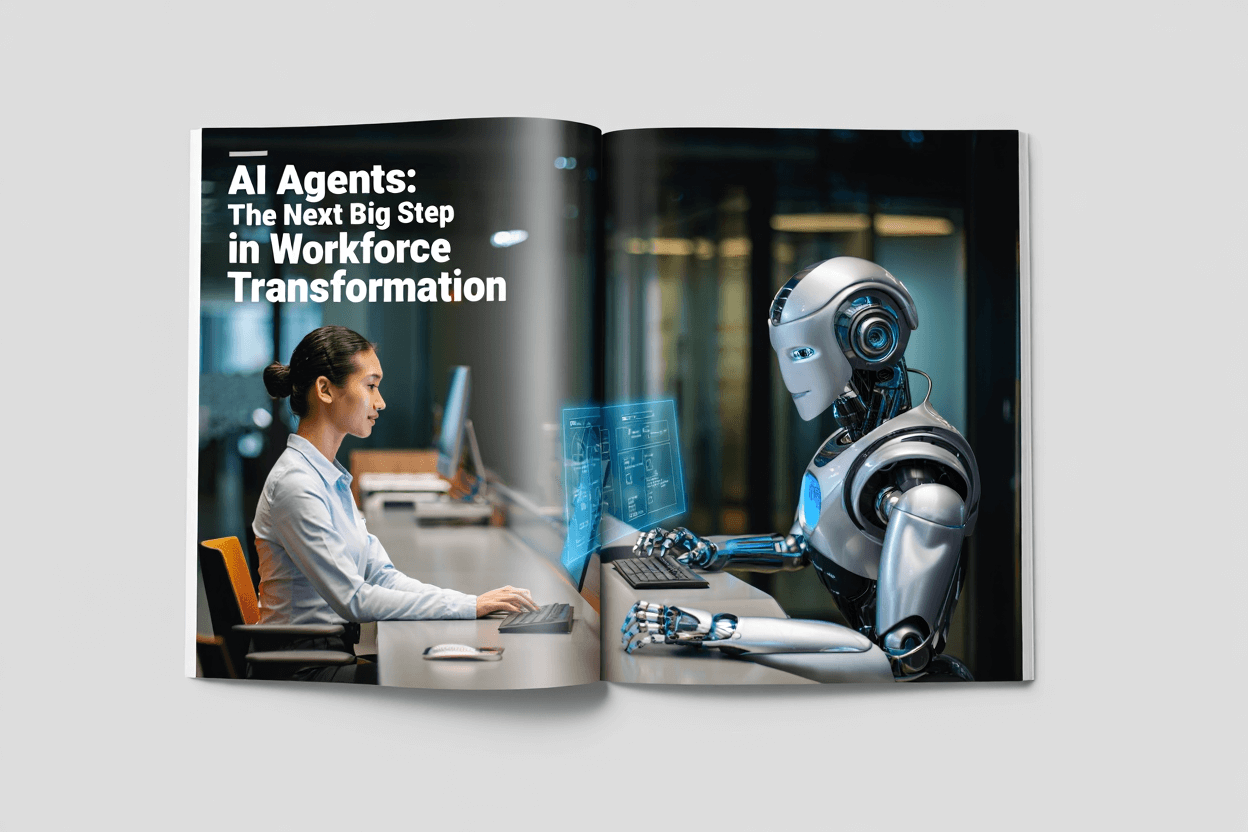
AI Agents: The Next Big Step in Workforce Transformation

AI agents are transforming the workplace by going beyond automation to learn, adapt, and make decisions like digital colleagues. This article explores how they revolutionize HR, boost efficiency, and reshape the future of work—while tackling key challenges along the way.
For years, staffing agencies have relied on automation to speed up operations. We have used applicant tracking systems to parse resumes, set up automated email sequences, and programmed basic chatbots to answer FAQs. These tools have been valuable, but they have also reached their functional limits. They are rigid, rule-based, and break the moment a candidate or client does something unexpected.
Now, the recruitment industry is entering a new era. We are moving beyond basic automation into the realm of AI agents. Unlike the static software of the past, AI agents do not just follow instructions; they understand context, make decisions, and adapt to changing situations. For staffing and recruitment professionals, this shift represents the most significant workforce transformation in a generation.
The Evolution: From RPA to AI Agents
To understand the value of AI agents, it is helpful to look at how they differ from traditional Robotic Process Automation (RPA).
RPA is rule-based. It is designed for repetitive, predictable tasks. If you program an RPA bot to copy data from a spreadsheet into your ATS, it will do so flawlessly - until the spreadsheet format changes by a single column. RPA cannot think, adapt, or handle ambiguity. It requires constant maintenance and human supervision to fix broken workflows.
AI agents, by contrast, are autonomous, adaptive, and intelligent. Powered by large language models and advanced machine learning, they can interpret unstructured data, learn from feedback, and make complex decisions. If an AI agent encounters an unexpected scenario, it does not crash; it analyzes the context and determines the best path forward.
While RPA acts as a digital conveyor belt, an AI agent acts as a digital colleague.
What AI Agents Can Do in Staffing
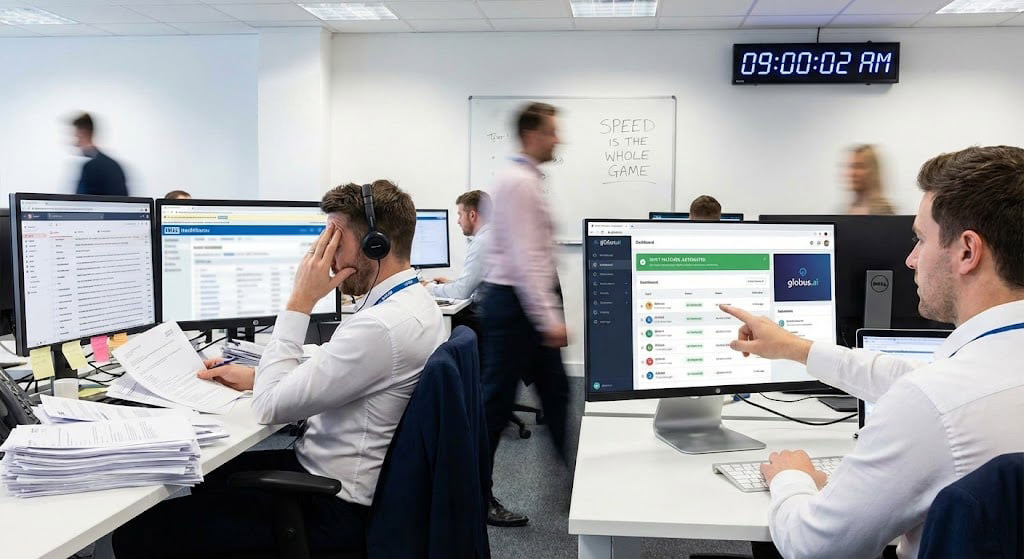
In a fast-paced staffing environment, speed and accuracy are everything. AI agents can be deployed across the entire recruitment lifecycle to handle complex, multi-step workflows that previously required hours of manual labor.
- Intelligent Matching: Instead of relying on simple keyword searches, AI agents analyze the deeper context of a resume and a job description. They understand transferable skills, industry experience, and availability, delivering highly accurate matches in seconds.
- Personalized Outreach: Rather than sending generic automated email blasts that candidates ignore, AI agents draft highly personalized outreach messages based on a candidate's specific background, career history, and preferences, significantly increasing response rates.
- Compliance and Credentialing: Verifying licenses, certifications, and background checks is notoriously slow and error-prone. AI agents can autonomously review compliance documents, identify missing information, and follow up with candidates to secure the necessary paperwork.
- Dynamic Scheduling: Coordinating interviews across multiple calendars is a constant bottleneck. AI agents can manage the entire scheduling process, handling cancellations, rescheduling requests, and last-minute changes autonomously.
At Globus.ai, we have built specialized AI agents designed for these exact challenges. Eira automates shift and order processing, instantly matching open shifts with the right candidates. Cora manages personalized candidate outreach at scale. Alma ensures compliance by autonomously verifying credentials and documentation. Together, they eliminate the administrative friction that slows agencies down.
Semi-Autonomous vs. Fully Autonomous Agents
When implementing AI agents, it is important to understand the two primary ways they operate.
Semi-Autonomous (Human-in-the-Loop)
In a semi-autonomous setup, the AI agent does the heavy lifting but a human recruiter makes the final decision. For example, the agent might analyze hundreds of candidates, select the top three, and draft personalized outreach messages - but will not send those messages until a recruiter reviews and approves them. This model is ideal for high-stakes tasks where personal relationships and human judgment are critical.
Fully Autonomous (Background Running)
In a fully autonomous setup, the agent operates in the background without requiring human intervention for every step. When a client submits a new urgent shift request, a fully autonomous agent can instantly identify qualified candidates, verify their compliance status, send them the shift offer, and update the ATS once the shift is accepted. Humans are only notified if an exception occurs.
How to Get Started
Transitioning to an agentic workflow does not happen overnight. To ensure a successful implementation, staffing agencies should follow a structured approach.
- Start with clear, high-impact use cases: Do not try to automate everything at once. Identify the specific bottlenecks costing your team the most time. Start with one clear use case, prove the value, and then scale.
- Keep humans in the loop initially: When deploying a new AI agent, start with a semi-autonomous model. Allow your recruiters to review the agent's matches and outreach drafts. This builds trust in the technology and ensures quality control during the transition.
- Train your team to collaborate with AI: Ensure your recruiters understand that AI agents are designed to eliminate administrative busywork - not their jobs. Train them to leverage the time saved to build stronger relationships with clients and candidates.
Augmentation, Not Replacement
The fear that AI will replace recruiters is common, but it misunderstands the nature of the staffing industry. Recruitment is, and always will be, a relationship business. Candidates do not want to negotiate their salaries or discuss their career concerns with a machine. Clients do not trust algorithms to understand their unique operational culture.
AI agents do not replace recruiters; they augment them. By taking over the repetitive, time-consuming tasks of sourcing, matching, scheduling, and compliance, AI agents free up recruiters to do what they do best: build relationships, consult with clients, and guide candidates through major career transitions.
The agencies that embrace AI agents today will not only operate faster and more efficiently - they will also provide a superior, more human experience for their clients and candidates alike.
Want to see how AI agents work in practice? Book a demo with the Globus.ai team.